Nội dung phim The War Between
The War Between
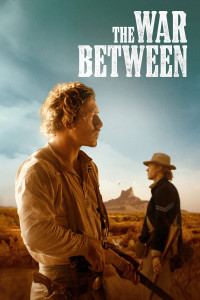
The war between the states had scarred the land from Virginia to Tennessee, but its tendrils reached farther, strangling even the parched silence of the Arizona desert. Here, under a merciless cobalt sky, the war between ideologies found two unlikely survivors: Corporal Elias Thorne, a Pennsylvania farm boy turned Union rifleman, and Sergeant Jedediah Colt, a Georgia cotton broker with gray in his beard and a veteran’s hollow eyes.
They were pieces of opposing armies thrown together by a cruel twist of fate—a Confederate supply wagon ambushed, a Union patrol investigating, and a flash flood that had swept away both parties’ horses and clear sense of direction. Now, the only uniform that mattered was the faded blue and the butternut brown, both baked to the same dusty crimson by the sun. The civil war had shrunk to a survival epic between two men on a vast, indifferent canvas of mesas and dust.
Thorne, young and with a Northerner’s ingrained belief in progress and order, saw the desert as a puzzle to be solved. He checked his canteen obsessively, his fingers tracing the map burnt into his memory. Colt, whose world had already crumbled with the fall of Atlanta, saw only omens. He read the wind for storm, the lizard for water, a pragmatism honed not in classrooms but in foxholes. Their first days were a study in silent, watchful hostility. Thorne would try to ration water with mathematical precision; Colt would drink his fill at night, trusting his body’s ancient rhythms. Thorne wanted to head east, toward the Colorado River; Colt insisted west, toward the known posts of Texas, his knowledge of this territory born of pre-war trading routes.
The desert stripped away arguments. A shared threat—a rattlesnake coiled in the shade of a rock—was met not with muskets but with a thrown stone, a moment of instinctive, joint action. That night, the biting cold descended. Without a word, Thorne spread his blanket closer to Colt’s small fire. The warmth was a truce. The war between them was being fought not with rifles, but with glances over a dwindling water skin, with decisions about which rocky crevice offered the slimmest chance of shade.
They spoke in fragments. Thorne, wrestling with haunting memories of Antietam’s cornfield, whispered of home. Colt, his voice like dry grass, spoke of his daughter, left with her mother in Macon. The grand issues of slavery and sovereignty, the loud banners of their causes, evaporated. What remained was the raw, human calculus of survival: Who would take the first watch? Who had the stronger eyes to spot distant smoke? Whose cough, developing in the dry air, was a greater liability?
A dust storm sealed them in a shallow arroyo for two days. As the grit sifted through every seam of their clothing, they were just two creatures huddled against the roar, sharing a piece of hardtack, their uniforms indistinguishable under the grime. When the sky cleared, a new, unspoken understanding had settled. The war between them was no longer a conflict of sides, but one of man against the land. And the land was winning.
They finally stumbled upon a miner’s crude well, not where Thorne’s map said, but where Colt’s memory of an old survey marker had guided them. The water was foul, but it was wet. As they drank, Thorne met Colt’s gaze. There was no camaraderie, no friendship forged. Only a grim, mutual recognition. They had been instruments of a vast, chaotic war, and now they were simply two men who had seen the same merciless sun rise and set, who knew the weight of the other’s canteen, who had been forced to lower their rifles not in surrender, but in the face of a common, ancient enemy.
Parting at the edge of the desert, where the scrub gave way to a cavalry patrol’s dusty trail, they did not shake hands. Thorne gave a slight, stiff nod. Colt touched the brim of his hat, a gesture of plain respect. They turned their backs on each other and walked toward the distant sound of different bugles. The war between was over for them here in the dust, but the larger war, the one that had sent them here, stretched on, a distant, incoherent thunder. They carried the desert’s quiet lesson within them: that amidst the grand clash of banners, survival often belongs not to the righteous, but to the adaptable. And sometimes, the most profound enemy is the one you must look in the eye, share a canteen with, and then leave behind in the sand.
The War Between